
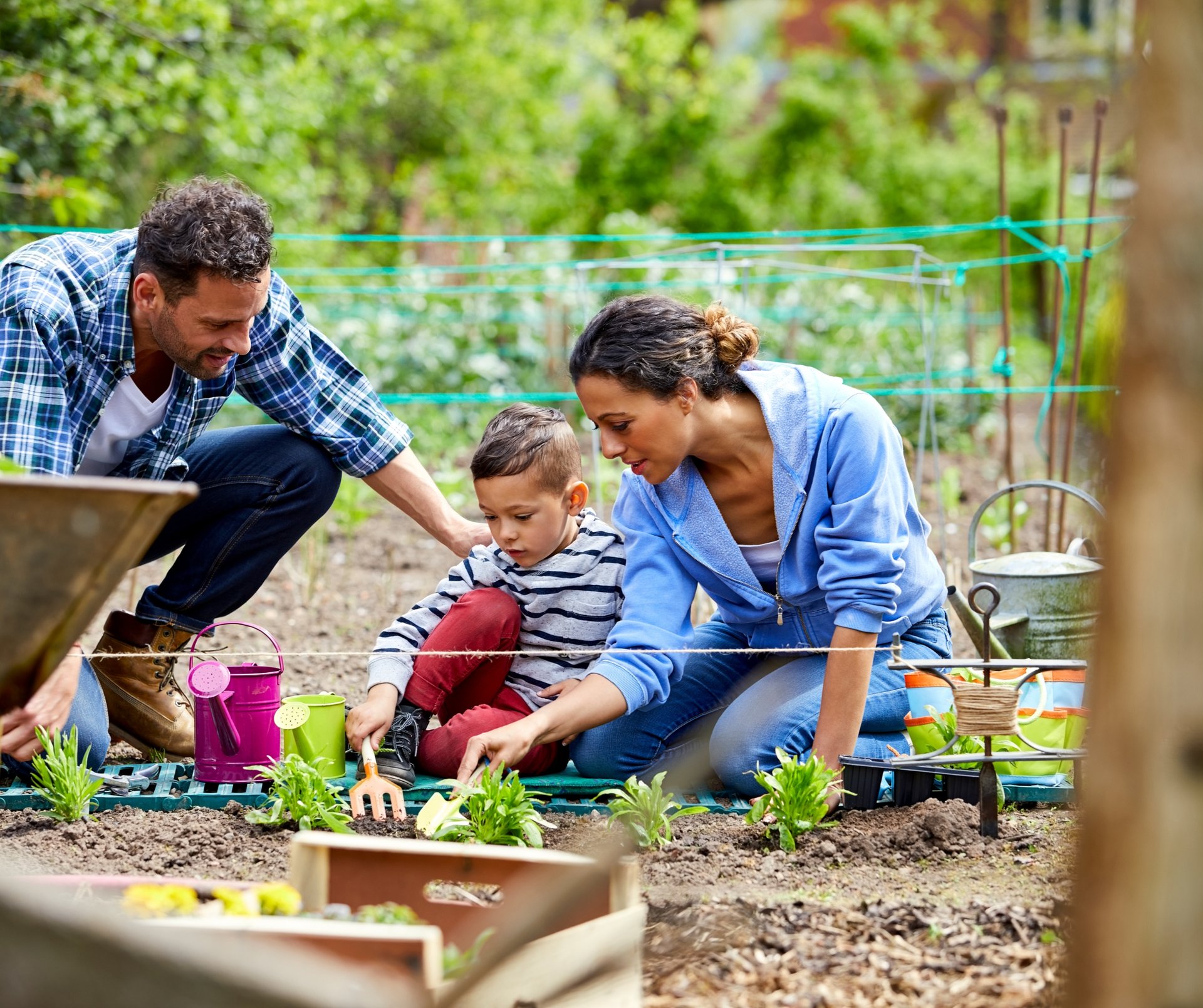
Gardening as a Family: How to Grow Food, Life Skills, and Sanity (Yes, All Three)
Grow Food, Skills, and Stronger Connections, Together
Let’s get one thing out of the way: family gardening is messy.
There will be dirt tracked into the house. Seeds that never sprout. A tomato plant that mysteriously disappears (looking at you, dog). And at least one child who loses interest halfway through watering.
That’s not failure.
That’s real family gardening.
Gardening as a family isn’t about creating magazine-worthy garden beds or adding another “educational activity” to your already full plate. It’s about raising capable kids, building confidence, and creating screen-free moments that fit real life, not fantasy life.
If you’re a beginner gardener wondering:
Where do we even start?
How do I keep kids interested?
Is this worth the effort?
You’re in the right place.
This hub will walk you through the problems families face with gardening, and realistic, doable solutions that work even if you’ve never grown a thing in your life.
The Real Problem With “Gardening as a Family” Advice
Most gardening advice assumes:
You have unlimited time
Your kids love dirt
You already know what you’re doing
That’s not most families.
The common struggles:
Kids lose interest fast
Parents feel overwhelmed
Gardens fail and morale tanks
It feels like more work, not less
The result? Families quit before they ever see the benefits.
The solution:
Start small, focus on skills over success, and build a system that works with family life, not against it.
Why Gardening as a Family Is Actually Worth It
Let’s talk ROI, because yes, this has one.
Gardening teaches kids:
Responsibility (plants don’t water themselves)
Patience (nothing grows overnight, sorry)
Problem-solving (Why is this plant sad?)
Confidence (“I grew this” hits different)
Gardening helps parents:
Slow down without feeling unproductive
Reduce screen dependence (without a battle)
Model resilience when things fail
And here’s the underrated benefit:
You don’t need to entertain kids when they’re invested in something real.
Step 1: Redefine What “Success” Looks Like
If your definition of success is: “A perfect garden where everything thrives”
You will burn out.
A better definition:
Kids participated
Something grew (even a little)
You showed up consistently
Dead plants aren’t failures.
They’re teachable moments.
“Well, that didn’t work. Let’s try something else.” That’s life skills in action.
Step 2: Choose Beginner-Friendly Crops (This Matters More Than You Think)
Nothing kills motivation faster than plants that refuse to cooperate.
Best plants for family gardening beginners:
Lettuce – grows fast, forgiving, great confidence booster
Radishes – ready in about 30 days (kids love the speed)
Bush beans – low-maintenance and productive
Cherry tomatoes – hardy and rewarding
Herbs (basil, mint) – hard to mess up and fun to smell
Avoid for now:
Watermelons
Cauliflower
Anything labeled “challenging” (believe it)
Early wins build momentum.
Step 3: Start Small (Smaller Than You Think)
One raised bed.
A few containers.
Even a window box.
That’s it. Big gardens look impressive, but they:
Require more maintenance
Increase overwhelm
Lead to quitting
A small garden that thrives beats a big one that stresses everyone out.
Step 4: Give Kids Real Jobs (Not Fake Ones)
Kids know when they’re being “included” versus trusted.
Age-appropriate gardening tasks:
Toddlers: watering, digging, dumping soil (controlled chaos)
Ages 5–8: planting seeds, harvesting, labeling plants
Ages 9+: planning, tracking growth, troubleshooting issues
Let them mess up.
Let them learn.
You’re not raising perfect gardeners, you’re raising capable humans.
Step 5: Expect Failure (Then Use It)
Here’s the truth no one says out loud:
Some plants will die. Probably several.
Instead of panicking:
Ask what might’ve caused it
Google together
Try again
Failure is part of gardening, and parenting.
When kids see adults problem-solve instead of quit, that lesson sticks.
Step 6: Make It Fit Your Actual Life
If gardening feels like a burden, it won’t last.
Simple ways to integrate it:
Water plants while dinner cooks
Garden for 10 minutes, not an hour
Tie harvesting into meal prep
Keep tools accessible (not hidden away)
Consistency beats intensity every time.
Step 7: Celebrate the Small Wins (Out Loud)
That tiny sprout? Celebrate it.
That crooked carrot? Celebrate harder.
Kids remember what you react to.
When effort gets recognized, not perfection, motivation grows naturally.
Common Family Gardening Mistakes (So You Can Avoid Them)
Let’s call these out directly:
Doing everything yourself
Expecting kids to “just love it”
Starting too big
Giving up after one failure
Gardening is a long game.
Families who succeed treat it like one.
What Gardening as a Family Actually Builds Over Time
You won’t notice it in week one.
But over time:
Kids ask better questions
Responsibility becomes habit
Confidence shows up in other areas
Family routines slow down, in a good way
And one day, your child will say:
“Remember when we grew that?”
That’s the payoff.
Final Thought: You’re Doing Better Than You Think
If you’re reading this, you already care.
That’s the hardest part.
Gardening as a family doesn’t need to be perfect.
It needs to be real, consistent, and kind, to yourself included.
Start small.
Laugh when things fail.
Grow together.
That’s the garden worth tending.
Contact:
valeriegardensinfo@gmail.com
Don’t Miss What’s Growing Next 🌱
Our newsletter delivers timely tips, seasonal playbooks, practical recipes, and no-nonsense advice straight to your inbox. No fluff. No spam. Just high-value insights you can actually use.
Disclosure: As an Amazon Associate/Influencer, I earn from qualifying purchases.